 Pinksale
 Subscription Pools: Overflow Allocation and Token Caps
Pinksale subscription pools allocate sale tokens by each participant’s share of total committed funds, subject to any configured per-user token cap. In an oversubscribed pool, committing funds does not mean spending the entire amount. Finalization determines the token allocation and the corresponding purchase cost at the subscription rate.
Last updated -
In short: A subscription pool’s per-user cap limits received tokens, while the subscription rate determines the purchase cost in the contribution currency.
Commitment Share Before Token Caps
An oversubscribed pool’s initial allocation depends on individual commitment, total commitments, and the tokens offered for sale.
The calculation divides the individual commitment by total commitments, then multiplies that fraction by the total selling amount.
Both commitment figures use the pool’s contribution currency. The resulting allocation uses project-token units, keeping the currency ratio separate from the token quantity.
Further commitments change the denominator. With the individual commitment and selling amount unchanged, the initial proportional allocation decreases.
Which Subscription Limits Are Denominated in Tokens?
Total Selling Amount, SoftCap Tokens, and HardCap Token Per User all refer to quantities of the project’s token.
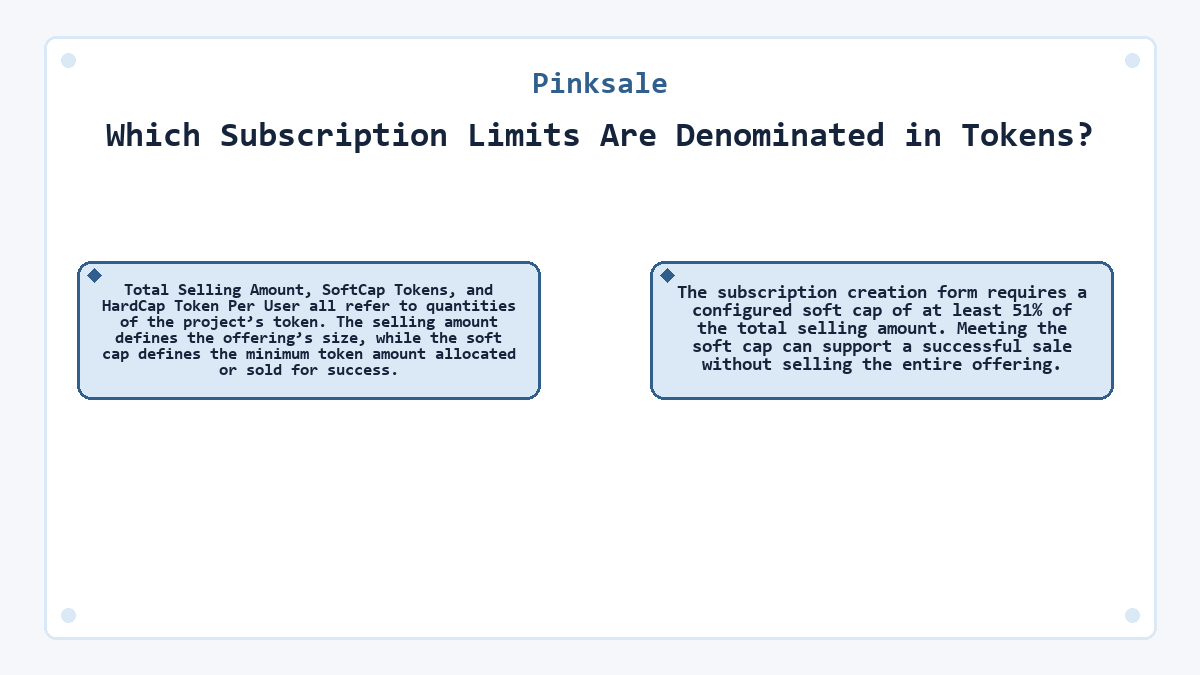
The selling amount defines the offering’s size, while the soft cap defines the minimum token amount allocated or sold for success. The subscription creation form requires a configured soft cap of at least 51% of the total selling amount. Meeting the soft cap can support a successful sale without selling the entire offering.
How Does the Per-User Cap Affect Allocation?
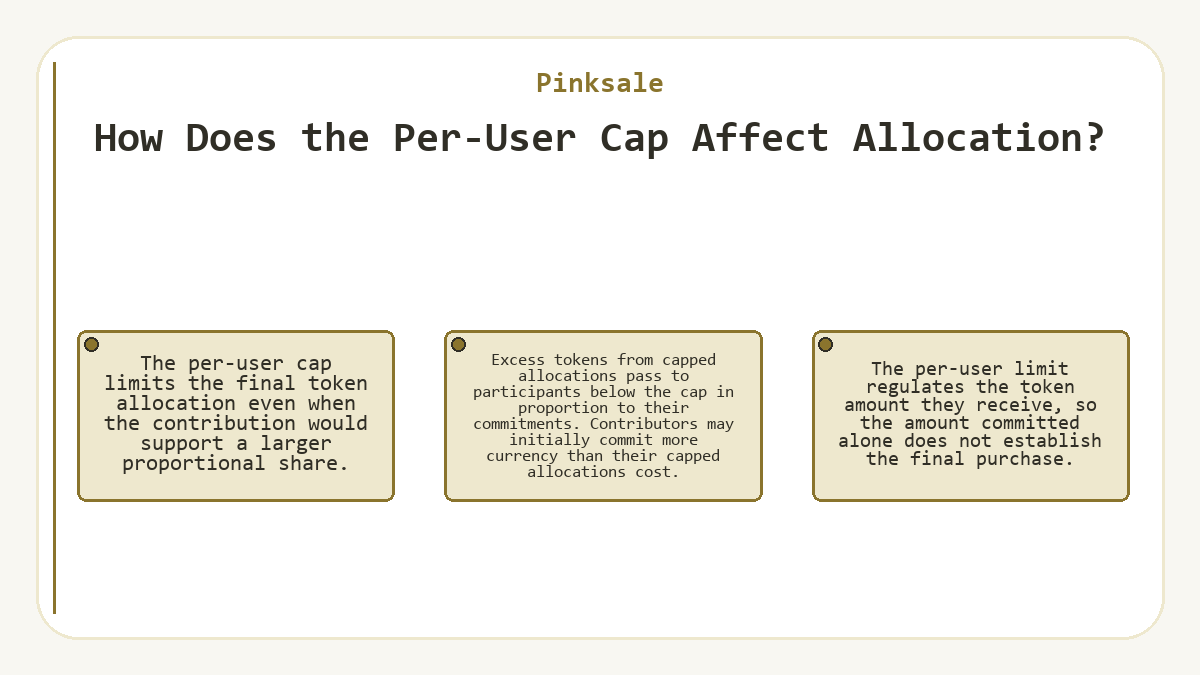
The per-user cap limits the final token allocation even when the contribution would support a larger proportional share. Excess tokens from capped allocations pass to participants below the cap in proportion to their commitments.
Contributors may initially commit more currency than their capped allocations cost. The per-user limit regulates the token amount they receive, so the amount committed alone does not establish the final purchase.
The Subscription Rate and Purchase Cost
The subscription rate converts the final token allocation into a cost in the contribution currency. A rate quoted in tokens per currency unit requires division of the token allocation by that rate. A quote in currency per token requires multiplication instead. The unused commitment equals the original contribution minus the allocation’s purchase cost. Network transaction fees sit outside this calculation.
Finalization and Claim Availability
Finalization requires the sale to meet its soft cap, end its contribution period, and show "Calculating" as its status. That status precedes finalization; it does not establish a completed allocation. Tokens with transfer taxes, rewards, or transaction limits also need the applicable pool-address exemptions before finalization. The owner must submit the finalization transaction, and the blockchain must confirm it successfully.
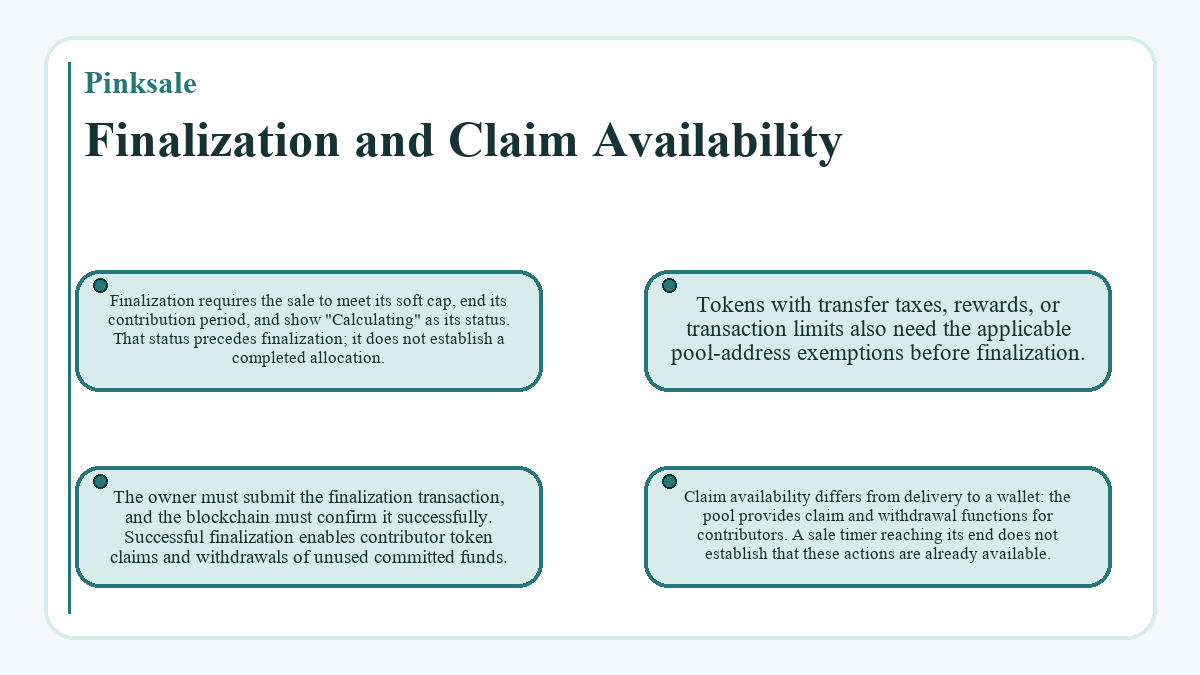
Successful finalization enables contributor token claims and withdrawals of unused committed funds. Claim availability differs from delivery to a wallet: the pool provides claim and withdrawal functions for contributors. A sale timer reaching its end does not establish that these actions are already available.
Listing Terms Beside the Sale Allocation
The listing rate sets the token’s initial DEX listing price, while the subscription rate determines the sale allocation’s purchase cost. Neither rate fixes the price of later market trades.
With Auto Listing, finalization adds the configured DEX liquidity and locks the associated liquidity pool tokens. Manual Listing leaves liquidity provision to the owner. The liquidity lockup setting uses minutes and applies to the specified liquidity position; it does not set a contributor’s sale-token allocation or lock a separate team balance.
Why Can Token Restrictions Block Finalization?
Transfer taxes, transfer-triggered rewards, and transaction limits can interfere with the subscription contract’s token movements. These rules can reduce received amounts or prevent transfers.
The required exemption concerns the specific subscription pool address. Excluding only the creator’s wallet leaves the pool subject to the token’s transfer rules.
The token contract must support the necessary exemption, and an authorized owner must configure it before finalization. Function names and parameters depend on the contract; there is no universal exemption command. Some tokens also require exemptions for the selected router or liquidity pair, depending on their transfer logic.
Standard tokens without these transfer features generally do not require this exclusion step.
Interpreting a Large Commitment Total
A final allocation above the initial proportional share can reflect redistribution from capped participants. Reconstructing that adjustment uses the commitment ratios of participants still below the cap.
- Read the selling amount and per-user cap in project-token units.
- Use commitment share for the initial proportional allocation in a fully subscribed or oversubscribed pool.
- Include redistribution when participants reach the configured token cap.
- Calculate purchase cost using the subscription rate’s stated units.
- Check successful finalization before treating contributor claims as available.
If the pool sells less than its full offering, meeting the token-denominated soft cap determines whether the sale succeeds.
Pinksale - your questions answered
Can a Pinksale Subscription Pool Restrict Participation to Whitelisted Addresses?
A subscription creator can enable a whitelist so only approved addresses participate. This eligibility setting controls access to the pool, separately from the per-user limit on final token allocations.
Do Stablecoin Subscription Pools Accept Taxed Project Tokens?
Stablecoin fundraising in this subscription setup generally requires a standard, non-taxed project token. Fee-exemption support for a pool using another contribution currency does not establish compatibility with the selected stablecoin setup.
Where Do Unsold Tokens Go After a Successful Subscription?
Unsold project tokens follow the configured refund type when the pool meets its soft cap without selling the full offering. The Refund option returns those tokens to the owner; Burn sends them to a dead address. This setting concerns unsold project tokens, separately from a contributor’s unused payment currency.
Which Costs Apply When Creating a Subscription Pool?
Subscription fees include an upfront creation charge and a percentage of funds raised when the sale succeeds. Creation transactions also incur network fees. Platform charges vary by blockchain and sale type, so the selected creation form supplies the applicable quote. These charges apply to the pool creator and differ from a participant’s allocation purchase cost.
Does a Subscription pool’s Tokenomics Chart Prove Team Tokens Are Locked?
An editable tokenomics chart alone does not establish a team-token lock. A subscription pool page can display separate PinkLock information for team or other tokens. That lock concerns its specified token balance and release terms, separately from the subscription’s selling amount and liquidity settings.